
How concrete floors are treatedPrepare. Treat. Maintain.
The result does not come out of a bucket. It comes from preparing the surface, applying the right sequence and cleaning the floor every day after handover.
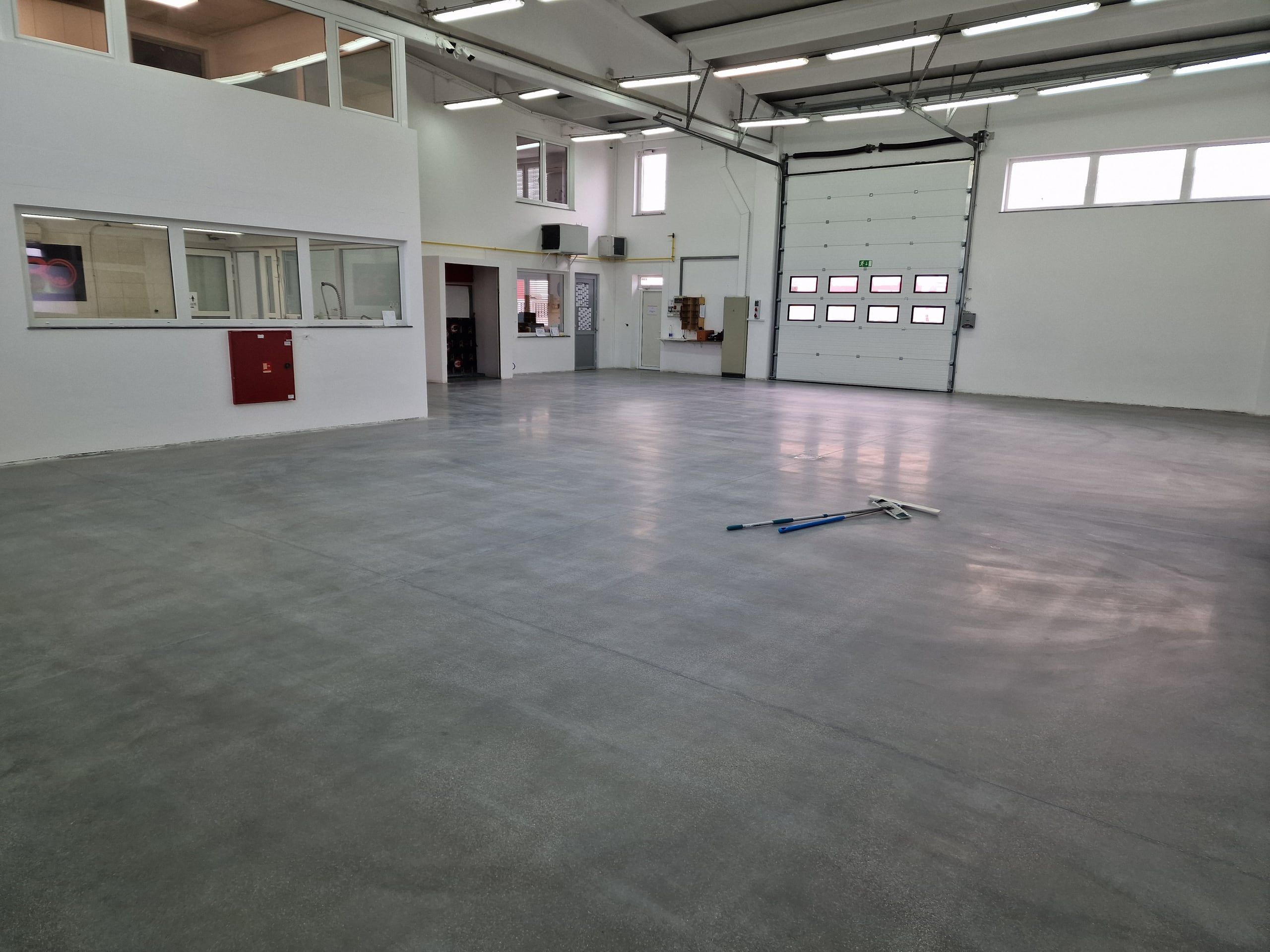
Steps of the work
Prepare
- 1
Site visit and assessment
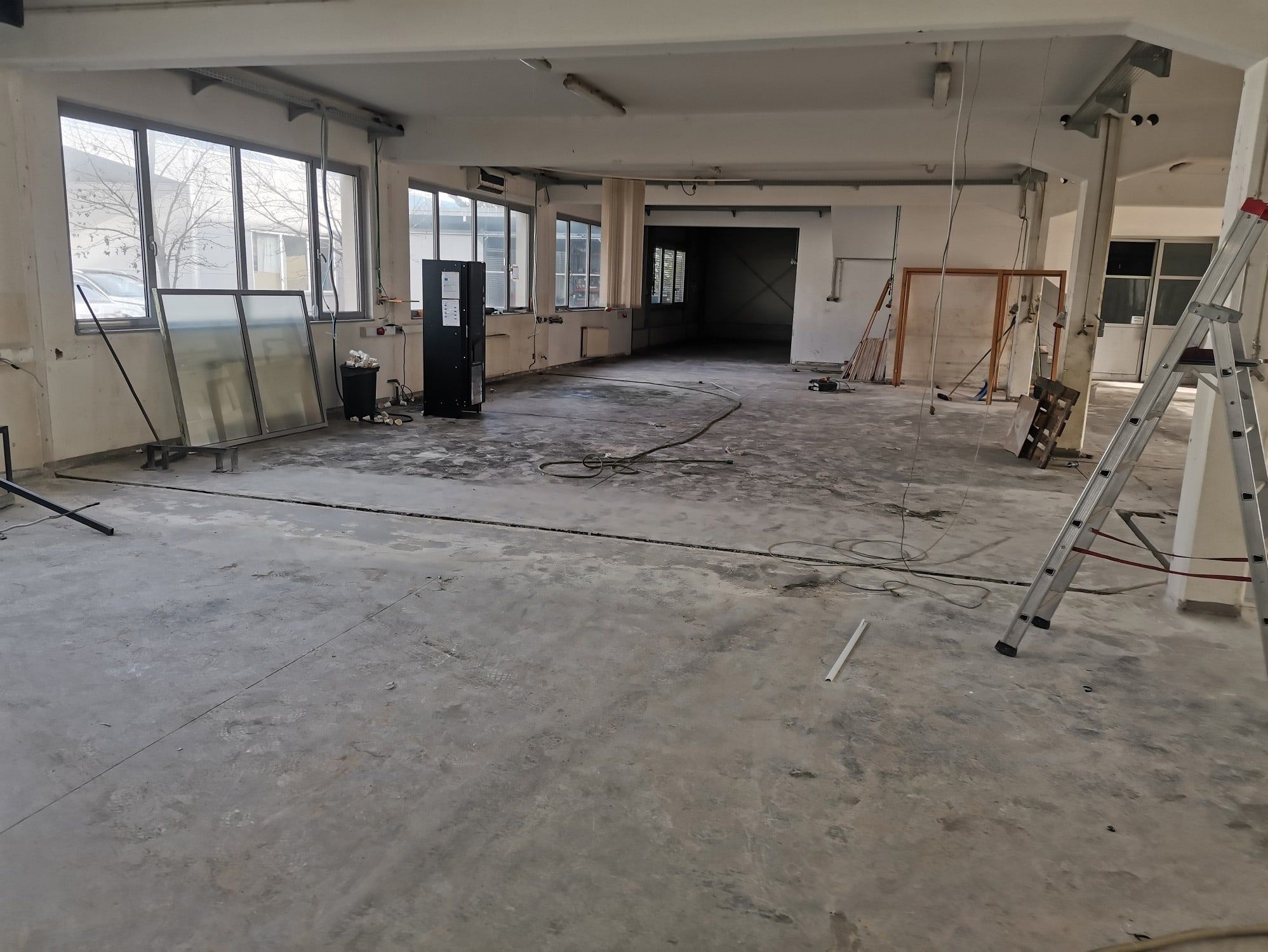
We check the quality of the concrete, contamination, old coatings, moisture, how the slab was finished and the loads it carries. From this we propose a sequence and a schedule.
- 2
Surface preparation
Existing floors are ground or thoroughly cleaned back to sound, absorbent concrete. We remove old coatings, oil, paint and adhesive. New floors must be clean and free of curing compounds and formwork release oils.
- 1
Treat
- 3
Hardening or densifying
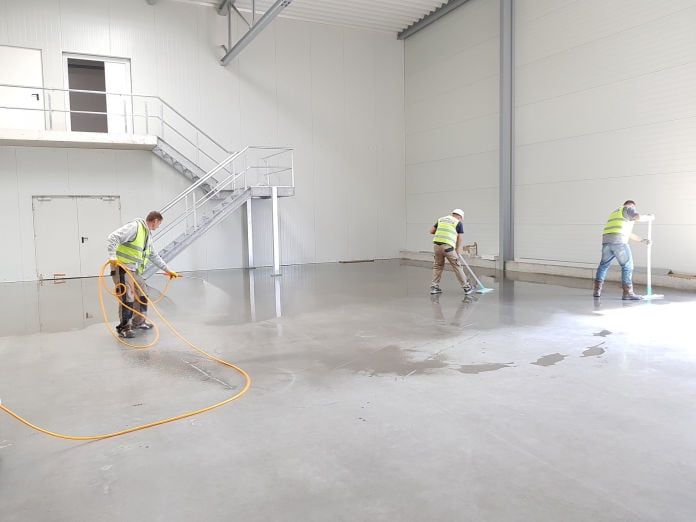
Application of Lithurin HARD or DENS. The surface has to stay saturated so the impregnating agent penetrates and reacts evenly.
- 4
Intermediate cleaning
Where needed, we remove the excess and prepare the surface for the next step, following the manufacturer’s instructions.
- 5
Sealing and protection
SEAL or SEAL 3.0 for sealing, depending on whether the area is a dry interior or a wet, outdoor or polished surface. PROTEC as the final step wherever stains are part of daily work.
- 3
Maintain
- 6
Handover
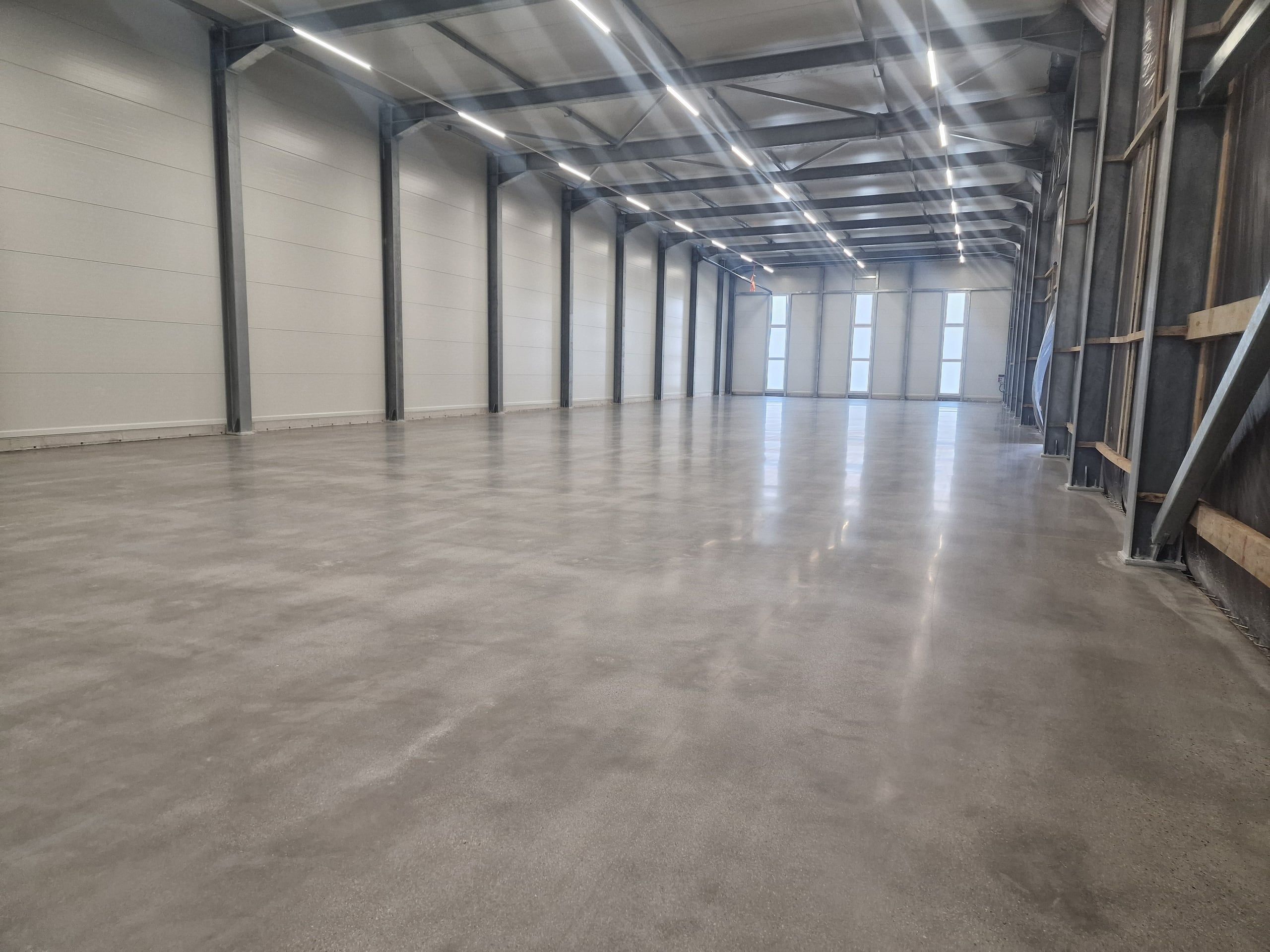
We explain what the treated floor can and cannot withstand, and how to clean it. That keeps expectations realistic.
- 7
Daily cleaning
Regular removal of abrasive dirt, and cleaning with Concrete Soap and a Suprashine 8000 diamond pad on a scrubber dryer.
- 6
What happens after handover?Cleaning and maintenance
What we need for a site visit
For a quicker assessment, send us whatever you already have with your enquiry.
- The approximate area in m² and the location of the building
- Whether it is a new slab or an existing floor
- Type of traffic: forklifts, vehicles, foot traffic
- How it is cleaned: dry, by machine, wet, pressure washing
- Special conditions: oils, chemicals, outdoor areas, old coatings
- A few photos of the floor, including damaged areas
How long the work takes
The duration depends on the size, condition and accessibility of the area. For around 1,000 m² we usually allow 2–3 days. We plan the schedule around your operations.
Drying time per application
- HARD
- approx. 30 min
- DENS
- approx. 30 min
- SEAL 3.0
- approx. 60 min
- PROTEC
- approx. 40 min
at +15–18 °C, source: manufacturer's technical data sheet.
Frequently asked questions
Do we have to stop operations for the treatment?
Traffic must be kept off the section being treated during application and drying. We can split the work into sections and fit it around your schedule.
Can the floor be treated in winter or outdoors in the cold?
The products must not be applied in frost or on surfaces that cannot absorb them. At lower temperatures drying takes longer, so we schedule outdoor work around the weather.
Do we need grinding?
For existing floors, usually yes, because the concrete has to be clean and absorbent. New, properly power-floated slabs do not normally need grinding, unless the aim is ground or polished concrete.
Show us your floor. We will recommend the right sequence.
On a site visit we check the condition of the concrete, the traffic, how the floor is cleaned and what it is exposed to. Then we propose the surface preparation, the product sequence and a schedule that fits around your operations.